Summary
Umrah has four steps, always in this order: Ihram, Tawaf, Sa’i, then Halq or Taqsir. This guide walks through that sequence — what happens at each stage, how long it roughly takes, and where pilgrims most often go wrong on the order rather than the detail of any single step. For the full how-to on Ihram rules or performing Tawaf correctly, this guide links out to our dedicated deep-dive guides at each step.
The Umrah Sequence at a Glance
| Step | What Happens | Roughly How Long |
|---|---|---|
| 1. Ihram | Enter the sacred state at the Miqat with intention and Talbiyah | Before you reach Makkah |
| 2. Tawaf | Seven circuits around the Kaaba, then two rakah | 30–90 minutes, crowd-dependent |
| 3. Sa’i | Seven passes between Safa and Marwah | 45–75 minutes |
| 4. Halq or Taqsir | Shave or trim hair; Ihram ends | A few minutes |
Nothing in this sequence can be reordered. Tawaf cannot happen before Ihram is entered, Sa’i cannot happen before Tawaf is finished, and Ihram does not end until hair is cut. Understanding that fixed order — more than memorizing every micro-detail of each step — is what actually prevents first-timers from getting lost mid-ritual.
Step 1: Ihram — Entering the Sacred State
Ihram begins at or before the Miqat, the boundary point for your direction of travel. Men wear two unstitched white sheets; women wear modest, loose clothing in any color, with the face and hands uncovered in front of non-mahram men optional per personal practice and school of thought.
At the Miqat, make your intention (niyyah) for Umrah and recite the Talbiyah. From this point, Ihram restrictions apply — no perfume, no cutting hair or nails, no arguments or marital relations, and several other rules that catch first-timers off guard if they haven’t read them in advance.
This guide won’t repeat the full rule set here — get the complete, detailed breakdown in our Ihram rules guide for men and women before you travel, not after you land.
Step 2: Tawaf — Seven Circuits Around the Kaaba
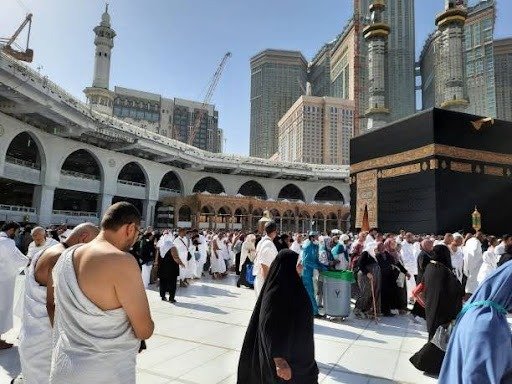
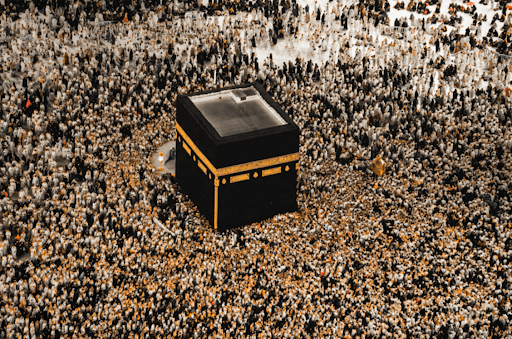
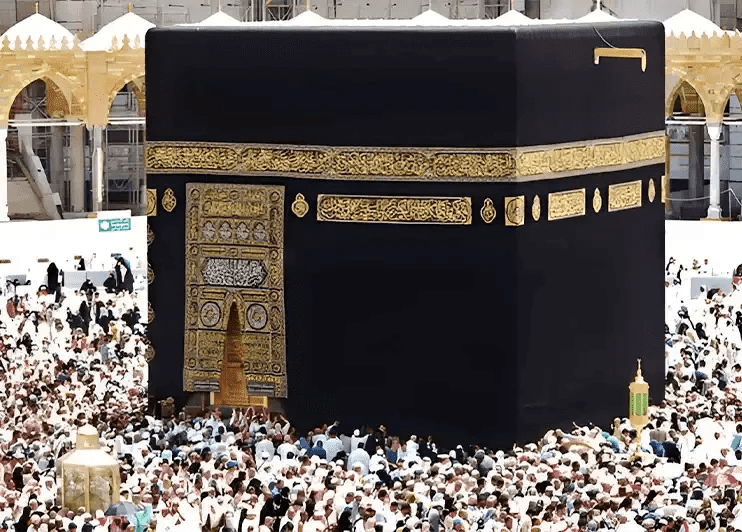
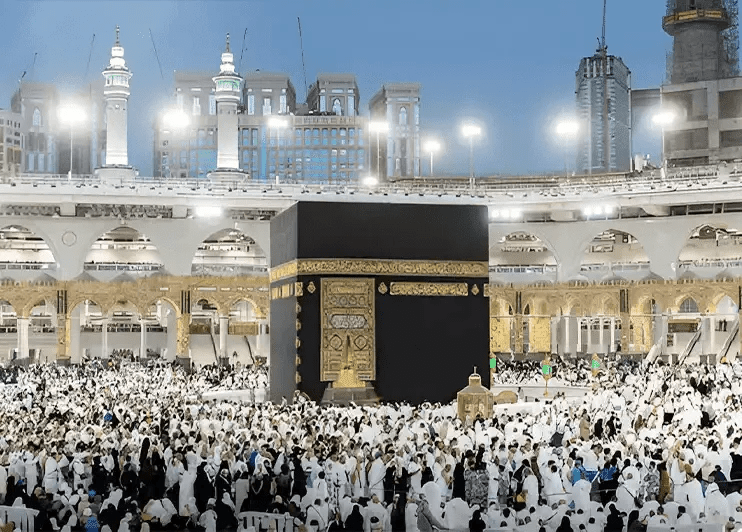
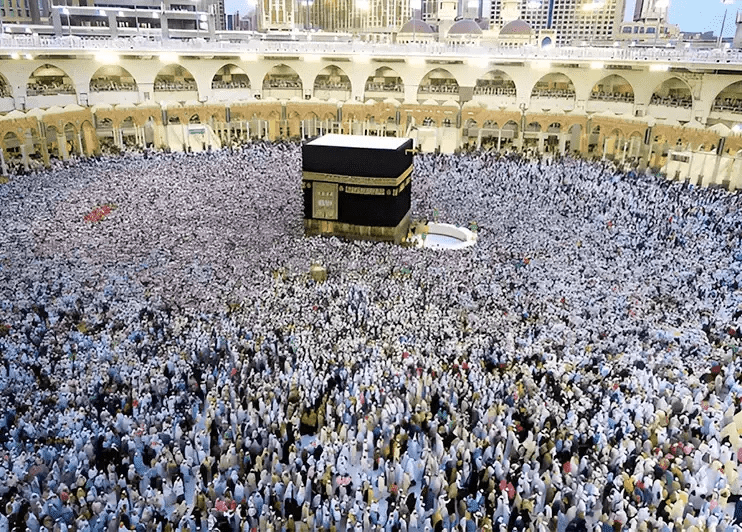
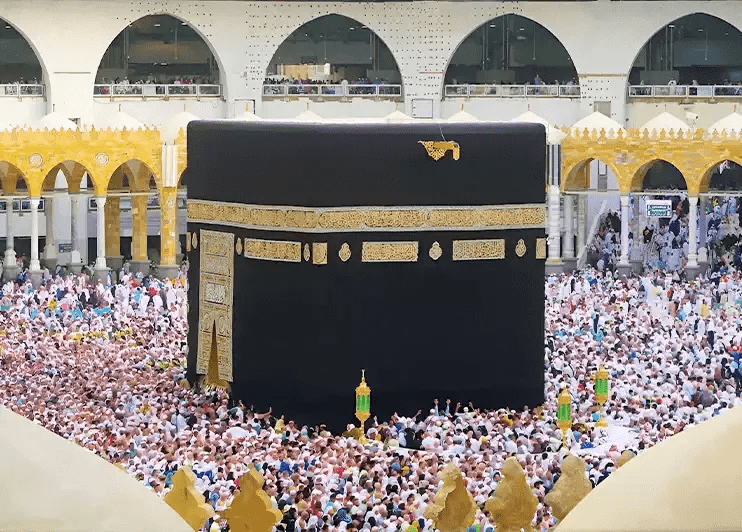
Once you reach Masjid al-Haram, Tawaf comes next: seven anti-clockwise circuits around the Kaaba, starting and ending at the corner marked by the green light near Hajr al-Aswad (the Black Stone).
A few things worth knowing before you start, covered in full in the dedicated guide:
- You do not need to touch or kiss the Black Stone — pointing toward it is sufficient
- There is no fixed dua required per circuit
- Walking through Hijr Ismail, the low wall beside the Kaaba, invalidates that circuit
- After the seventh circuit, pray two rakah, anywhere in the mosque if the area behind Maqam Ibrahim is too crowded
That’s the summary. For the complete step-by-step — including Hijr Ismail, Raml, Idtiba, the Yemeni Corner, and what to do if you lose count or your wudu breaks mid-Tawaf — see our full guide to how to perform Tawaf. If you’re looking specifically for what to recite during the circuits, that’s covered separately in our dua for Tawaf guide.
Step 3: Sa’i — Between Safa and Marwah
After Tawaf, proceed to Sa’i: walking seven times between the hills of Safa and Marwah, starting at Safa and finishing at Marwah, commemorating Hajra’s search for water for her son Ismail.
Men walk briskly between the green markers on each pass; women walk at a normal pace throughout. As with Tawaf, there is no specific dua required for Sa’i — dhikr, personal supplication, or silent reflection are all acceptable.
Sa’i covers roughly 3.15 km across all seven passes, so pace yourself, especially straight after Tawaf. Sit or pause briefly if you need to — a short rest doesn’t invalidate the ritual.
Step 4: Halq or Taqsir — Completing Umrah
Umrah ends with cutting hair. Men shave the head (Halq) or trim it evenly all over (Taqsir) — shaving carries greater reward, but either is valid. Women trim a small portion, roughly a fingertip’s length, from the ends of their hair.
Once this is done, Ihram restrictions lift and Umrah is complete.
Common Mistakes With the Sequence Itself
Most first-timers don’t get individual rituals wrong so much as the order and transitions between them:
- Entering Masjid al-Haram and heading straight for Sa’i, skipping or rushing Tawaf under crowd pressure
- Cutting hair before finishing Sa’i — Ihram doesn’t end until all four steps are complete, in order
- Assuming Ihram ends at Tawaf — it doesn’t end until Halq or Taqsir, so restrictions still apply through Sa’i
- Not knowing what to do if wudu breaks mid-sequence — you may need to pause and restart from where you left off in Tawaf specifically, not the whole sequence; see the full Tawaf guide for the detail
- Booking a package or flight that doesn’t leave enough time to do all four steps unhurried on arrival day, especially after a long flight from the USA
Practical Tips for First-Timers
- Perform Umrah late at night or early morning, when Tawaf and Sa’i crowds are lightest
- Keep the whole sequence — Ihram through Halq/Taqsir — in mind as one continuous process; don’t treat Tawaf as “finishing” the ritual
- Carry a small bag for your shoes through Tawaf and Sa’i
- Rest and hydrate between Tawaf and Sa’i if you need to — there’s no time limit forcing you straight from one into the other
- Focus on completing the sequence calmly rather than perfectly; sincerity matters more than precision
Visiting Madinah After Umrah
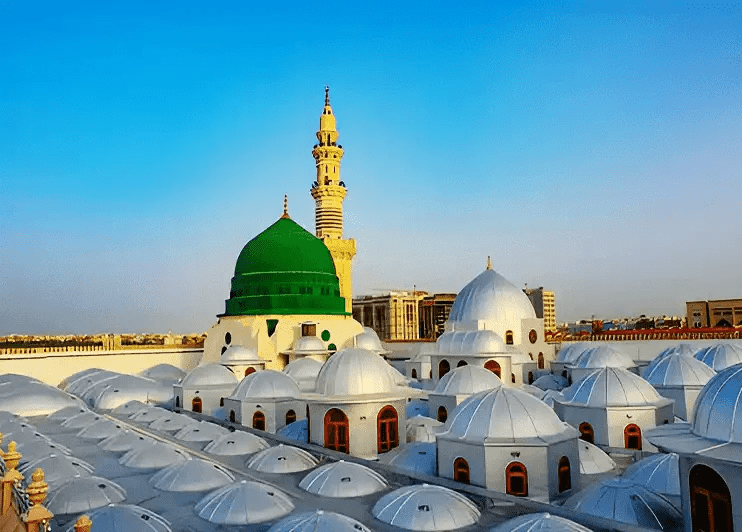
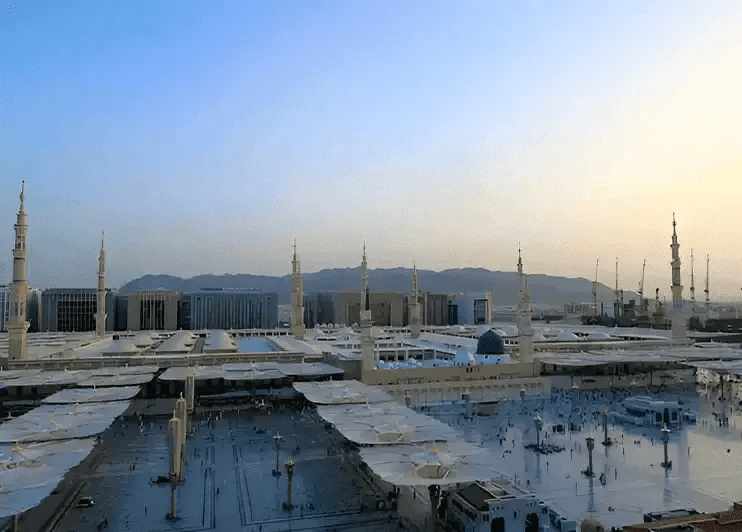
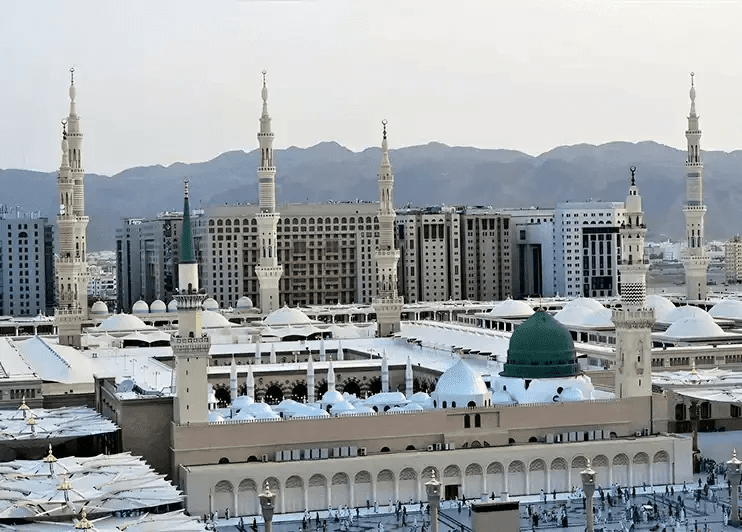
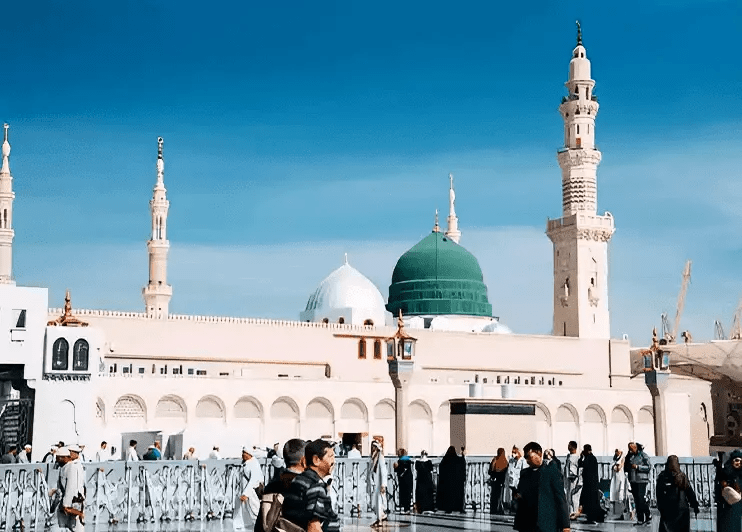
Visiting Madinah isn’t part of the Umrah sequence itself, but most pilgrims combine the two. Praying in Masjid an-Nabawi and sending salutations on the Prophet ﷺ is highly recommended, and many Umrah packages from the USA include Madinah nights as standard.
Planning the Full Sequence With a Package
The ritual sequence itself is straightforward once you know the order. What trips people up is everything around it — arriving in Makkah with enough time before your flight home to do all four steps unrushed, having transport sorted between cities, and staying close enough to the Haram that Tawaf and Sa’i don’t turn into an exhausting trek.
Our Umrah packages for USA pilgrims handle the visa, hotel and transport logistics so the only thing you need to plan is the worship itself. Get a quote and we’ll build the itinerary around it.
FAQs
What are the 4 steps of Umrah in order?
Ihram, Tawaf, Sa’i, then Halq or Taqsir (cutting hair). This order is fixed and cannot be rearranged.
How long does it take to perform Umrah from start to finish?
Roughly 2 to 4 hours for the ritual sequence itself in normal crowds — longer during Ramadan or Hajj season, and Tawaf/Sa’i can each take considerably longer if the Haram is busy.
Does Ihram end after Tawaf?
No. Ihram restrictions remain in effect through Sa’i and only lift after Halq or Taqsir.
Do I need to know specific duas for each step of Umrah?
No. There’s no fixed, required dua for Tawaf or Sa’i specifically — dhikr and personal supplication in your own words are sufficient throughout.
Can I perform Sa’i before Tawaf?
No. Sa’i always follows Tawaf, and Tawaf always follows entering Ihram at the Miqat. The sequence is fixed.
What happens if I make a mistake in the sequence?
It depends on the mistake — some errors mean repeating a step, others don’t affect validity at all. If you’re unsure mid-ritual, ask one of the guidance staff stationed around the Haram rather than guessing.