The 5 Pillars of Islam
Islam is a complete way of life that guides a Muslim’s beliefs, actions, and social conduct. At its core are the Five Pillars of Islam, which serve as the foundation for faith and worship. These pillars shape not only religious practices but also personal character and community responsibilities. Understanding them helps Muslims live with purpose and maintain a strong connection with Allah.
This guide explains each pillar clearly and highlights their significance in daily life.
Understanding the 5 Pillars of Islam
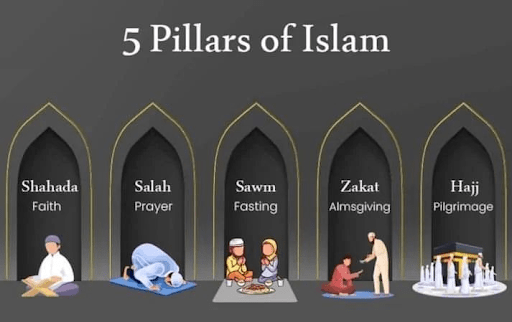
The Five Pillars of Islam are the essential acts of worship that every Muslim is expected to follow. They provide a clear structure for practicing Islam and offer a balanced approach to spiritual growth and social responsibility. Each pillar has a specific purpose, and together they form a complete system of faith.
The Five Pillars are:
- Shahada – Declaration of Faith
- Salah – Five Daily Prayers
- Zakat – Compulsory Charity
- Sawm – Fasting during Ramadan
- Hajj – Pilgrimage to Makkah
First Pillar of Islam – Shahada (Declaration of Faith)
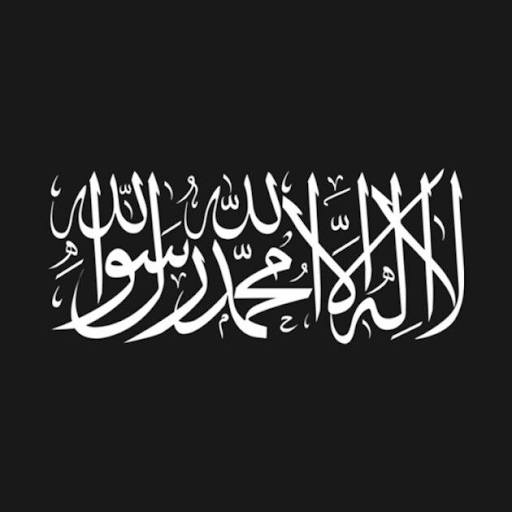
The Shahada is the declaration of faith and the first pillar of Islam. It is a simple yet powerful statement that confirms the belief in the oneness of Allah and the finality of Prophet Muhammad ﷺ.
Arabic:
أَشْهَدُ أَنْ لَا إِلٰهَ إِلَّا ٱللَّهُ وَأَشْهَدُ أَنَّ مُحَمَّدًا رَسُولُ ٱللَّهِ
Transliteration:
Ashhadu an la ilaha illallah, wa ashhadu anna Muhammadan rasulullah.
This declaration is not just words. It is a commitment that shapes a Muslim’s identity and worldview. A person becomes a Muslim by sincerely pronouncing the Shahada, and it is repeated in daily prayers to reinforce faith.
The Shahada is the foundation on which all other acts of worship depend. Without this belief, the other pillars lose their meaning. A Muslim’s actions must come from a sincere belief in Allah and His messenger.
Second Pillar of Islam – Salah (Five Daily Prayers)
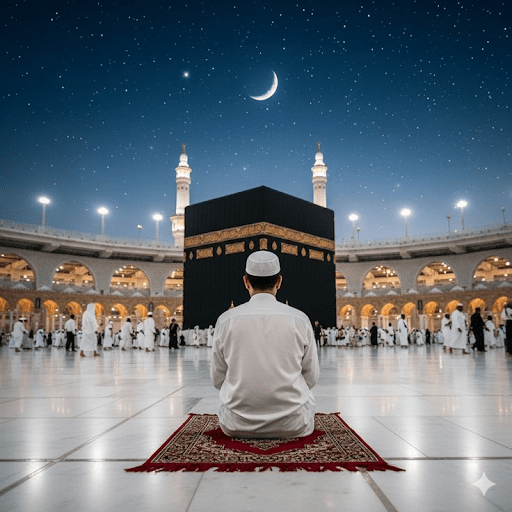
Salah is the second pillar and refers to the five daily prayers that Muslims must perform. Prayer is a direct connection with Allah and acts as a constant reminder of a person’s duties and purpose in life.
The five prayers are:
- Fajr: Before sunrise
- Dhuhr: After midday
- Asr: Late afternoon
- Maghrib: Just after sunset
- Isha: Nighttime
Arabic:
إِنَّ الصَّلَاةَ كَانَتْ عَلَى الْمُؤْمِنِينَ كِتَابًا مَوْقُوتًا
(النِّسَاء: 103)
Translation:
“Indeed, prayer has been decreed upon the believers at specified times.”
(Surah-An-Nisa: 103)
Many people understand Salah as a ritual, but it is also a source of discipline. Prayer sets a daily rhythm and helps a Muslim stay mindful of their responsibilities. It teaches patience, focus, and self-control. In busy daily life, Salah keeps a person grounded and reminds them that their time and actions belong to Allah.
Third Pillar of Islam – Zakat (Compulsory Charity)
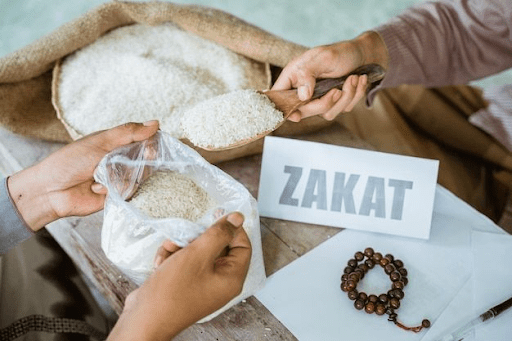
Zakat is the third pillar and refers to the obligatory charity that Muslims must pay when their wealth exceeds a certain threshold known as Nisab. The standard rate is 2.5% of savings and wealth held for one lunar year.
Zakat is meant to purify wealth and support those who are less fortunate. It is not a voluntary donation. It is a duty that maintains balance in society and prevents wealth from concentrating in the hands of a few.
The Quran explains:
Arabic:
مَثَلُ الَّذِينَ يُنفِقُونَ أَمْوَالَهُمْ فِي سَبِيلِ اللَّهِ كَمَثَلِ حَبَّةٍ أَنبَتَتْ سَبْعَ سَنَابِلَ فِي كُلِّ سُنبُلَةٍ مِائَةُ حَبَّةٍ ۗ وَاللَّهُ يُضَاعِفُ لِمَن يَشَاءُ
(البقرة: 261)
Translation:
“The example of those who spend in the way of Allah is like a grain that produces seven ears, each ear having a hundred grains. Allah multiplies for whom He wills.”
(Al-Baqarah: 261)
Zakat is often misunderstood as only financial support. It is also a reminder to be responsible, humble, and generous. When a Muslim gives Zakat, they recognize that their wealth is a trust from Allah, and they use it to support the community.
Fourth Pillar of Islam – Sawm (Fasting during Ramadan)
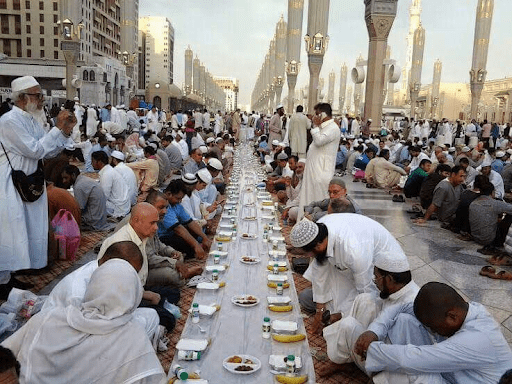
Sawm refers to fasting during the month of Ramadan. During this period, Muslims abstain from food, drink, smoking, and other physical needs from dawn until sunset. Fasting is not only a physical act; it is a spiritual discipline that teaches patience and empathy.
Key parts of fasting:
- Suhoor: Pre-dawn meal
- Iftar: Meal to break the fast
Arabic:
يَا أَيُّهَا الَّذِينَ آمَنُوا كُتِبَ عَلَيْكُمُ الصِّيَامُ كَمَا كُتِبَ عَلَى الَّذِينَ مِن قَبْلِكُمْ لَعَلَّكُمْ تَتَّقُونَ
(البقرة: 183)
Translation:
“O you who have believed, fasting has been prescribed to you as it was prescribed to those before you, that you may attain righteousness.”
(Al-Baqarah: 183)
Fasting teaches Muslims to control their desires and focus on spiritual goals. It is a time for reflection, prayer, and increased charity. It helps Muslims develop a deeper understanding of the struggles faced by those in poverty.
Fifth Pillar of Islam – Hajj (Pilgrimage to Makkah)
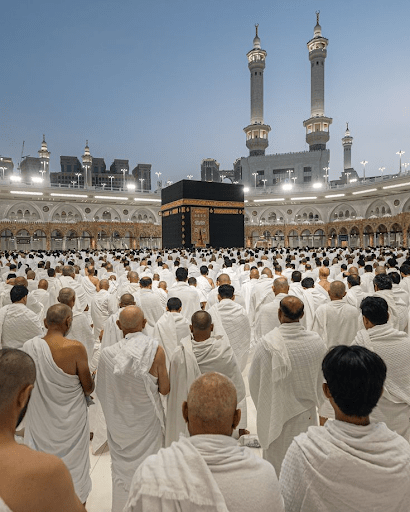
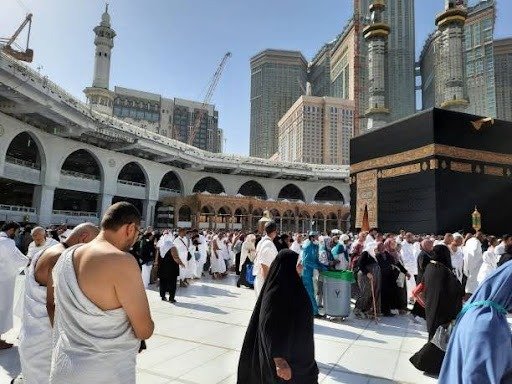
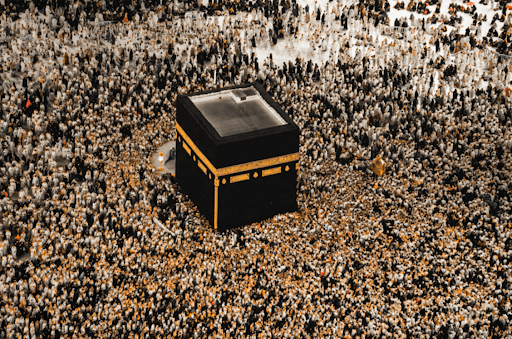
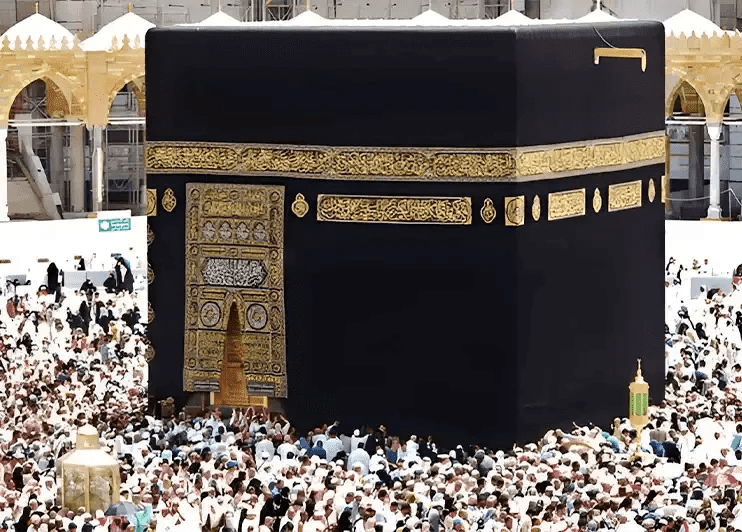
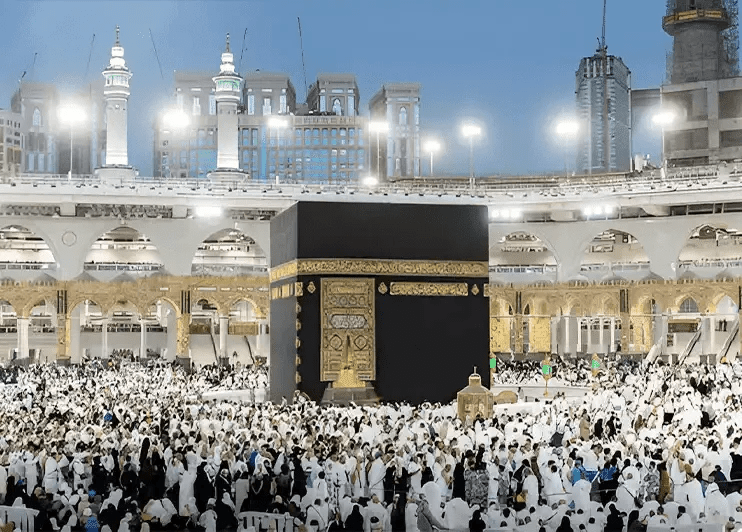
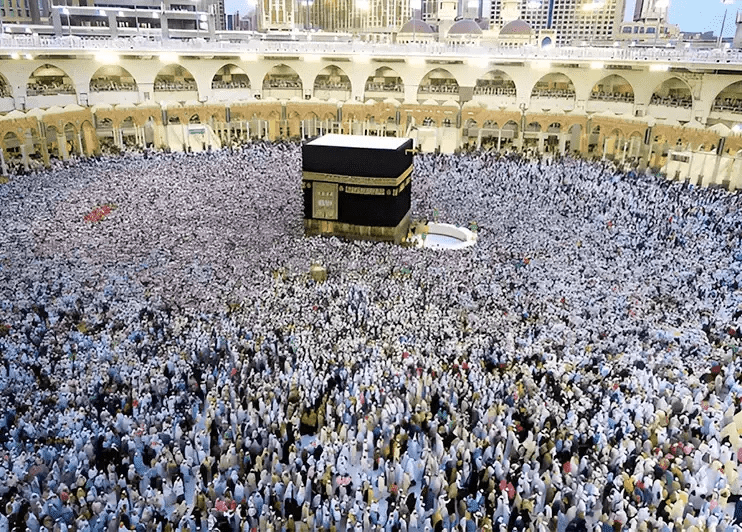
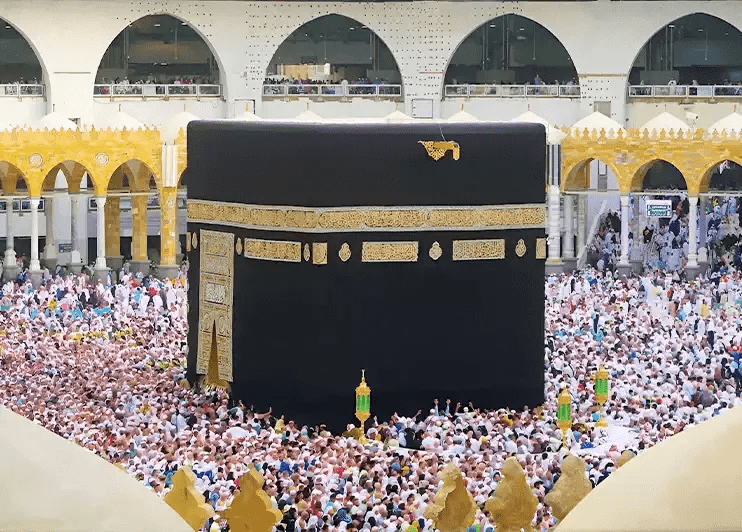
Hajj is the pilgrimage to the Masjid al-Haram in Makkah. It is required once in a lifetime for those who are physically and financially able. Many people often get confused in the difference between Hajj and Umrah. Hajj takes place during the month of Dhul-Hijjah and includes several key rituals that symbolize equality, unity, and submission to Allah.
The Quran states:
Arabic:
وَلِلَّهِ عَلَى النَّاسِ حِجُّ الْبَيْتِ مَنِ اسْتَطَاعَ إِلَيْهِ سَبِيلًا
(آل عمران: 97)
Translation:
“And Hajj to the House is a duty owed to Allah by mankind, for those who can afford the expenses.”
(Al-Imran: 97)
Hajj brings Muslims from around the world together, regardless of nationality or status. It is a reminder that all Muslims are equal before Allah. The experience is meant to renew faith and inspire a return to righteous living.
Importance of the 5 Pillars of Islam in Daily Life
The Five Pillars are not separate practices; they work together to build a complete Muslim identity. Shahada defines belief, Salah maintains connection, Zakat supports society, Sawm strengthens self-control, and Hajj reinforces unity.
These pillars also guide ethical conduct. They encourage Muslims to live with honesty, discipline, and compassion. A Muslim who follows the Five Pillars is more likely to be responsible in family life, business, and community.
Performing Umrah – Step-by-Step Guide
For first-time umrah pilgrims, understanding the steps of Umrah is essential for a smooth experience.
Step 1 – Entering Ihram
- Make the intention (Niyyah) for Umrah
- Recite the Talbiyah
- Follow the rules of Ihram
Step 2 – Performing Tawaf
- Perform seven circles around the Kaaba
- Maintain focus and respect throughout
Step 3 – Sa’i Between Safa and Marwah
- Walk seven rounds between Safa and Marwah
- Remember the story of Hajar (A.S)
Step 4 – Tahalul (Shaving or Trimming Hair)
- End the state of Ihram
- Complete the Umrah by trimming or shaving the hair
Conclusion
The Five Pillars of Islam provide a clear and balanced framework for Muslim life. They strengthen faith, build discipline, and encourage compassion and social responsibility. By practicing these pillars, Muslims maintain a strong connection with Allah and contribute positively to their communities.
Understanding the Five Pillars is essential for every Muslim, and following them leads to a life of purpose and spiritual fulfilment.
Frequently Asked Questions
Q1. What are the Five Pillars of Islam?
The Five Pillars are Shahada, Salah, Zakat, Sawm, and Hajj. They form the foundation of Islamic faith and practice.
Q2. Why is Shahada the most important pillar of Islam ?
Shahada confirms belief in Allah and the Prophet Muhammad ﷺ. It is the basis for all other acts of worship.
Q3. How many times a day should a Muslim pray?
A Muslim is required to pray five times a day: Fajr, Dhuhr, Asr, Maghrib, and Isha.
Q4. Who must give Zakat?
Zakat is obligatory for Muslims whose wealth exceeds the Nisab threshold. The rate is typically 2.5% of savings held for one year.
Q5. Who must observe fasting?
>>>>>>>>>>>Fasting during Ramadan is required for adult Muslims, except those who are ill, pregnant, traveling, or otherwise exempt.
Q6. Who must perform Hajj?
Hajj is required once in a lifetime for those who are physically and financially able.